Wednesday, July 09, 2008

The Faster the Better

If there is one type of board game that I'm partial to besides massive strategy games it would be racing games. I'm not sure exactly why, but I own several racing games and I find myself always drawn to any type of racing game when i'm parusing the internet or a game shop. Today's article will talk about some of the great racing games of the past and present so get ready, set ..go!!!


Arena Maximus

Despite weak reviews I purchased this game on impulse when it was released and to date it remains one of my favorite games rarely collecting dust on my shelf. Arena Maximus is a fantasy based chariot racing game where you play as one of five chariot drivers, racing on a deadly oval track. As you race down the track you have to avoid various obstacles, while simulatnously fighting with the other chariot drivers and trying to maintain control of your chariot. The game mechanic albeit it simple is very clever using a system where the cards in your hand represent control and whip cards played on the table represent your speed. The tough part is that your limited to 7 cards all together so the faster you go (the more whip cards you play) the less cards you have in your hand which are used to avoid obsticles, fight, cast spells and defend yourself, in effect your control. The faster you go the less control you have. When you fail to avoid an obsticle or defend yourself against a player attack your chariot takes damage, if you take too much damage you crash. Naturally the first player across the track wins the game but the game is played in reverse order so at the start of each turn the last player goes first, then the second to last etc.. etc.. so being in front can be a big disadvantage, while being too far back can put you out of the running for victory. The end result is that every race is extremly close as players try not to get too far ahead or fall too far behind until the very end when everyone makes a play for the goal line. In this game its rare that the race is anything but very very close. A very fun game I love to play, albeit the instructions are not very well written which I think has ultimatly lead to this games 'bargain bin' status, but all the better you can pick this game up dirt cheap.


Mississippi Queen
Mississippi Queen is one of those rare games that I can actually get none gamers to play and love. Its simple to learn and quite addictive. The premise is quite simple, you control a river boat in a race to the finish line on the very hazardous Mississippi river. You control the speed of your boat, but the speed you set you are commited to and you can slow down and speed up only so fast. In a pinch you can use your very limited resource oil to make the really tough manuvers, but watch out, the resource is in fact very limited and once its gone its gone. The trick to the game is that you don't see the track as you go down the river. A die is rolled to determine which way the river will turn and a randome tile is used and placed in the right position. The result is a sort of wacky race where you never really know if you are going too fast or too slow and what direction the river will bend next. To complicate matters you also have to pick up passengers along the way. The games mechanics might be too simple for some, but Rio Grande games usually function on the premise that the people playing their games aren't nescessarily gamers and I think the game works very well as a party game. You can pull this out after people have broken into the wine and expect it to be a very popular and fun experiance. Unfortunatly this game can sometimes be hard to find, a search on Ebay revealed only two copies, both severly over priced. The reason for this however is not that the game is rare but that people seem to have trouble spelling the word Mississippi correctly. A closer examination on Ebay reveals that quite a few copies are sold for as little as 10 bucks with various renditions of badly spell 'Mississippi's'. Really a great buy I strongly recommend it.


Formula De
Formula De is one of those games that benefits from more players and tends to be less fun with the fewer players you have. In fact even a 4 player game can seem uneventful. However if you do manage to get 6 or more people in a room to play a game, this is an experiance well worth it. Formula De uses a interesting mechanic in which you change gears represented by the type of dice you roll which in turn determines your speed (how far you can travel). You have various statistics for your car like tires, body and brakes which are a limited resource that allow you to avoid crashes when you go to fast or potentially crash into someone. In addition the track has control points which force you to travel down certain paths around turns, hence you must decide as you enter a turn which position you will travel along. This decesion can easily lead to a crash if you aren't planning your driving strategy appropriatly. Its a very addictive game, one that I wish I could play more often but unfotunatly as mentioned with anything less then 5 players much of the excitment is lost. The game has a pretty good level of support from the publisher with a variety of tracks and expansions available. The pricing on the game is kind of strange though, certain sets are very expensive in excess of 100 dollars while others barely breaking the 10 dollar mark. I'm not sure what the reason for that is but needless to say its difficult to recommand this game for 100 dollars, but if you can find it reasonably price it definitly deserves a place on your shelf.
The Good Not So Good

I don't normally do negative reviews of games, simply put this blog is about the games I like and recommend and generaly if I don't like a game I stick it on a shelf and quickly forget the reasons why moving on to better things. There are however several games I have played in the past few months that I simply didn't like and while Im not going to go into detailed reviews, here a few thoughts on some of the games that just didn't do it for me.

Last Night On Earth
I had an oppertunity to play this game a few times in recent weeks and I have to say, while I loved the concept and the exceptionaly high quality parts I just couldn't find much to like about this games mechanics. I was actually quite suprised to see so many positive reviews of this game on boardgamegeek.com and although its average score is at about a 7.5 out of 10 on that site, I personaly would rank it a few points below that. The game is simple enough, one player acts for the zombies and the rest of the players take on the personas of the sterotypical zombie movie survivors , aka Cheerleader, Football Jock, Preacher etc.. The simple combat game has the survivors running around the board equiping themselves as they kill zombies and perform any number of missions depending on the scenario of the game. To me this game just felt like it was missing a layer of complexity for it to be entertaining. The fights were grossly based on pure luck (dice rolls) and each game boiled down to the survivors doing pretty much the same thing which is to find the best weapons possible and avoiding packs of zombies, especially in melee combat. In the company of friends joking around and roleplaying their characters and zombies the game was tolerable but all and all I really can't recommend this one as anything more then a entertaining ruse, especially considering the hefty 40+ dollar price tag.

Runebound
Another game that has managed to get a fair following despite itself and considerable support with dozens of expansions already out. This one I played quite a bit when it was first released and recently a friend of mine pulled it out and we played a couple of rounds. I can understand the appeal of adventure games like Runebound, it sort of offers a short version of what roleplaying games are like for people who just don't have the time to commit to a roleplaying game. For me however, as a roleplayer when I play adventure games of this type which basicaly boil down to 'Kill Stuff, Loot Stuff, Level Up' I find myself wondering why we aren't just playing D&D or some other roleplaying game who's mechanics and feel are going to be considerably better. Even more so today with great adventure board games like Descent available. Runebound is a simple game, move your character around the board to adventuring site and fight whatever is there to gain experiance in an ultimate goal to acomplish a overall mission. The mission depends on the expansion set your playing with but generaly its just a boss monster at the end to defeat. It has some clever mechanics and plenty of interesting equipment and gadgets to peek the interest of any role player, but it very quickly wares out its welcome when you realize that there really isn't much strategy involved and the scenarios favor the player making it quite easy to beat the game. Playable, albeit it repetative, I certainly cano not recommend it if for no other reason then that the replay value is extremly limited. The only way to get a 'new' game feel is to constantly buy expansions which might explain why there are so many. For great adventure games I strongly suggest you look at games like Descent: Journeys in the dark and its various expansions.

Settlers of Catan
When I decided to add Settlers of Catan to this list of games i don't like I thought for certain I would stand alone. With an enormous following beloved by thousands this game is practicaly mainstream at this point. Its worth noting however that even on BoardGameGeek.com this game has recieved a 7.5 stars making it a middle of the road review for such an overwhelmingly popular game on one of the largest review sites for board games. I have played this game on a number of occassions however hoping to find what it is so many love about it but while I normally like Euro designed games, this one seems to me at the very least to be quite dull and very simpleton. I can see the strategy involved, but all and all its a game of luck which can often beat you despite you playing a wise strategy, a frustration I find to be quite often true with most of the Catan games which use die rolls to determine the resources you'll get to work with and build your strategy. The flaw in that is that if the dice don't roll your way your options are extremly limited, sometimes even non existant. The other thing I don't like about Settlers is that once you fall behind you stay behind, its a game which is very difficult to make a come back in. With that said I have to admit that I find the games overal concept quite appealing even if its mechanics miss the mark and I went out on a limb and purchased another game from the Catan line called Starship Catan.


Starship Catan, a better alternative to Settlers
Starship Catan is a two player game, using some similiar mechanics, albeit it toned down enough to eliminate the element of luck that you have in Settlers leaving far more to the players strategy. In StarShip Catan you are one of two space traders that has been lost in a distant galaxy and you are trying to find your way home. The local alien races are willing to help you for a price. The game is about you trying to raise the money you need to acomplish the various tasks for the alien races so they will show you the way home. You compete against another player by gathering resources, upgrading your ship and exploring the galaxy. The mechanics of the game are simple to learn and fun to play, its one of the few two player games I find myself playing very regularly. Again many of the concepts of Catan are in this game, but without the overbearing luck element. While only a two player game there is a Catan game which I believe this game was loosely based on, or at least inspired by called StarFarers of Catan. I have never played it but its definitly on my list.
Brain Teasers


I love games of all types and I try to make it a point never to judge a game until I've tried it. In recent years I have been introduced to a number of what I like to call 'Brain Teaser' games, often refered to as Abstract games. Generaly I have always stayed away from these types of games as I find that I enjoy a game far more if it has a story behind it then just some of the wall puzzle game. Still there are a couple of games that I have tried that I really loved and I thought they deserved a place on the blog.

Khet

Khet is a very interesting game played on a chess like board with a variety of pieces that have angled mirrors. On each side of the board is a simple red laser which when activated bounces off the various mirrored pieces until the laser 'hits' something. The object of the game is to move the pieces around and position them in such a way that they hit your opponents 'King' piece. Each player makes a single move each round and presses the lazer to see if it hits any pieces, if it hits a piece, regardless of who's it is, it is removed. Its a simple yet clever design that is extremly addictive while being incredibly complex. An easy game to learn, but very very difficult to master. Khet is a two player game, but I think it would be great to see this game adapted to have more then one player.


Ricochet Robots
This game I can only describe as painful yet exciting. The premise is quite simple, each round a random location token is drawn with a certain color. A timer is started and players must find the fastest route for that robot to take to that location on a game board with a variety of wall obsticles. You shout out your best guess how many 'bounces' it will take to get to the location, the player with the shortest route, that can prove it by moving the pieces gets the tab hence a point. The robots can only move in straight lines and must always move until they hit something before changing direction. You can move and use any of the other robots in play as well so it isn't just about finding how many bounces in the most logical way it would take, but creating new routes by using the other robots as walls to bounce off of. The hardest part of it all is that you can't touch any of the pieces, meaning you have to do it in your head. Once you shout out a number your stuck with it so if you made a mistake you can't change your mind. Its an easy game to learn and fun to play. I think I like it because its one of those games that it doesn t really matter how many players you have. It can be 2 or it can be 6, its fun either way. Its a great mental challenge as well, great way to warm up your strategic part of your brain before getting into your board gaming evening, although be warned that you might not play any other games once you start with this one.

Sunday, July 06, 2008

FURY OF DRACULA SPECTACULAR

If there is one thing I love its discovering a great, new board game that captures my attention the way many of my nostalgic favorites did the first time I played them. This past weekend I discovered such a game, a true gem in the rough that deserves all the praise I can offer. The Fury of Dracula by Fantasy Flight Games however is not a new game as I quickly discovered, in fact it is a gold box classic from the 80’s. I played the 2nd edition of the game recently released, but my understanding is that little has actually changed in the base design.

Van Helsing, the famed vampire hunter

The Fury of Dracula is a game in which one player represents Dracula and the remaining players represent the 4 famous vampire hunters from the Bram Stoker novel including none other then Van Helsing in a search to find and destroy the famed blood sucker in Europe. The simple yet elegant design plays very smoothly with an uncanny ability to keep all players glued to the game board regardless of who’s turn it is and maintaining a constant surge of suspense.

It might look complicated in an screen shot but the game is very simple to learn.


The premise is simple. You have pieces representing the hunters moving on a map of Europe from city to city searching for equipment, resolving a variety of events and encounters while searching for clues to Dracula’s whereabouts. Dracula also moves around the board in Europe, but unlike the hunters, he moves in secret through the use of ‘location cards’ which are placed face down in a row representing where Dracula is currently and a trail of cards of the locations he has been. When the hunters land on a city in which Dracula has been the location card is revealed from which the hunter players can make estimates of where Dracula might have gone and continue to follow the trail. Dracula leaves behind ‘encounter’ tokens to slow the players down, representing things like henchmen and traps for the players to fight through and overcome. The unique balance comes in the form of timing as each round represents a turn of the clock and as the day changes to night the advantage does as well as Dracula is stronger and has more powers at night while being considerably weaker in the day time. The hunters must not only find and trap Dracula, but time it so that they face him when he is weak else they can quickly become the hunted. The objective of the Dracula player is to survive long enough to spawn 6 Vampires in Europe, a task done in a variety of ways including planting Vampire encounters in cities to defeating on of the hunter characters.

The Box art for the original 1987 release of the game

The game is beautifully balanced although it may at first appear as though Dracula has a major advantage since he can essentially win the game over time by avoiding the hunters, initially a pretty easy task, but it becomes increasingly difficult for Dracula to do so as players pick up event cards and equipment that make locating Dracula easier. One drawback for Dracula is that he cannot return to places he has been in the last six rounds (the last six locations which are his trail). This fact makes it easier for the hunters to figure out where Dracula might have moved as well as help them to set up traps for Dracula through the use of various event cards and equipment. Dracula also spends blood to use his various abilities like wolf form which allows him to move faster, or hide which allows him to remain in place. This means over time as the players get stronger he can actually become weaker, a sort of count down for Dracula pushing him to act. In order to win as the Dracula player you must wisely avoid the hunters while also appropriately take advantages when their guard is down or they are weakened by the encounters you leave behind in cities. Timing, location, event cards and equipment are just some of the things that go into the complicated formula that is good strategy, but despite juggling these various resources the rules are so simple and elegantly presented that its quite easy to keep track of everything. Its really just a matter of good execution of a plan and a bit of luck.

If and when you do finally face Dracula or one of his many minions you are exposed to the unique combat system of Fury of Dracula, which is perhaps the only time when luck comes into play. Essentially each player has base abilities (both hunters and Dracula) like Punch, Escape and Dodge. Dracula has additional abilities like Mesmerize, Fangs and Claw, but many of these abilities only function at night, in fact during the day Dracula is considerably weaker then any single hunter especially if they have equipment like Pistols, Rifles, Crucifixes, stakes… etc.. Combat is resolved by each player choosing an action, ability or equipment card and simultaneously revealing them. Then a six sided dice is rolled and the player with the higher roll wins the round of combat. This does not however guarantee a victory of the combat or even that the winner of the die roll damaged his opponent. Each individual action, ability or equipment has a reaction to each other type of action, ability or equipment. Hence you resolve the round of combat depending what types of cards where played by each player. A pistol against a knife for example will have a very different result then say a Claw against a crucifix. Sometimes even if you win a round of combat you manage to only stay in the fight but not actually do any damage. Coming to a fight with the right equipment is crucial for the hunters, while simultaneously for Dracula its important to be fighting at the right time (at night) so that he has all his abilities available.

First time players might find that killing Dracula is very difficult, perhaps even smilingly impossible as they are unaware of what the various abilities and combinations of equipment and event cards can do, but one of the key advantages the hunter players have is that they are playing as a group and can share ideas, strategies, tactics even equipment. The Dracula player must effectively beat the group alone. Its also worth noting that it takes some time to see the big picture of the game, like chess you can learn how to move the pieces around quite fast, but knowing where the best place to put them and how the best way to use the pieces is really at the heart of the game.

One aspect of Fury of Dracula I really love is that the game plays very well as a 2 player game, in fact the experience is very much the same. Obviously its always more fun to have more hunter players who can discuss strategies and tactics, but in as a whole the game does not change whether you are playing with 2 or 5 players. In fact if you are looking for a really great 2 player game with a bit of complexity this is a great choice.

Fury of Dracula really has all the elements of a really great adventure game and even more so for fans who love the myths and legends of Dracula which this game has translated so honestly. Within you will find quotes, characters and plot elements from Bram Stokers novel as well as the ever growing popular culture of the Transylvanian tale. To me this game infuses great design with great story making for a great evening of gaming.


Enjoy it!

Tuesday, July 31, 2007

Shogun or Samurai Swords, which ever you prefer

Sticking to the theme of board games that I started with my recent short article on Twilight Imperium, I thought I would give my second most favorite board game a moment in the spot light as it certainly deserves it. Shogun, a game designed and released in the mid 80's, during what many might consider the golden age of big box board games, was my clear and undisputed favorite board game until the release of Twilight Imperium. A fairly simple game of strategic warfare with some tactical elements, a bit of diplomacy and management based on medieval Japan during the period of civil war in which Japanese Daimyos fought over the right to rule Japan. The design itself probably wouldn't stand out to most today in comparison to some of the great war games designed since then, in fact by most accounts the big board games of the 80's are classic for nostalgia sake rather then the fact that they were well designed games in themselves, but if there is one game that I think stood out and is still very playable and attractive today it would be Shogun.

The Classic 1985 release from Milton Bradly

A lot can be said about a game that is not just well designed, but nicely represented through the use of high quality art and pieces.


Shogun used a unique system, at the time, of having off board army formations represented by flags on the board, each player had three of these armies and created his army formation from several types of unique units like archers, gunners and samurai. Each unit had its own specialty and draw back, which meant that in order to be successful in combat you needed to have good positioning and good timing, as well as a bit of luck with the dice. The map itself was also very well balanced and the starting positions were randomized in much the same way as games like RISK which meant each game would have its own unique positioning and placement. Other interesting designs like the use of 'Ronin' warriors which would be purchased and placed face down on a territory card and revealed only when they were activated in combat gave players an opportunity to make unexpected surprise attacks giving the game a lot of very highly anticipated moments. The game played very well with 3, 4, or 5 players and because each player represented his own faction sort of speak, there was a lot of diplomatic maneuvering involved in securing temporary alliance, non aggression packs but at its heart it was a war game and each round boiled down to a fight.


One of my absolute favorite aspects of Shogun is that it was a very easy game to teach as its mechanics were incredibly simple and the strategic aspects of that mechanic were very apparent, despite actually being a very deep game. It was one of those, easy to learn, difficult to master type games. In fact I was originally introduced to the game when I was only 12 years old by my older brother and I had great success (although I never actually won) with players five years older then me. It's beautifully illustrated with lots of great, attractive pieces, speaking of it now I feel a sudden urge to play it. Fortunately unlike many big box games of the mid 80's that vanished into obscurity, this one was actually re-released in the mid 90's under the title Samurai Swords and although out of print now is still fairly easy to get from online resellers like eBay for a reasonable price (Usually around 50-70 dollars).


Fortunatly when it was released in 1995 the only thing that was changed was the title, in fact they didn't even bother changing the title in the rulebook which reads Shogun even in this version.


If you ever get the chance, this is an absolute must have for anyone who considers himself a board gamer, especially if you have interest in war games. Put this one high on your list, as it is on mine.

Monday, July 30, 2007

The Year Of Twilight

Above all other types of gaming, I hold a special place for board gaming, for many reasons but most notably for its nostalgic beginnings and my personal memories of my humble youth. Perhaps more so because I feel that board gaming is the granddaddy of role-playing games, which probably explains my attachment to it and when you think about it for a moment in most board games you do in fact take on the role of someone, whether it be the leader of a great civilization in games like the History of the World, or a railroad tycoon in games like Ticket to Ride. Beyond that however most game designers cut their teeth making board games and you can trace any good computer game designer, or role-playing writer to some obscure board game of their invention. This is because board gaming is really the granddaddy of every kind of gaming and I can with 100% assuredy link any PC game on today’s market to some board game of the past. You don’t really think Sid Meiers civilization was some kind of original thought for a computer game do you, heck no, Sid Meier borrowed his idea from Francis Tresham who designed Civilization the board game in 1981, ten years before the release of civilization the PC game and so is the history of many PC games out there.

Not Sid Meiers Civilization


On the top of my board gaming favorites which include gems like Shogun and Civilization, something I intend to write future articles on, there was a game that came along a bit later then the 80’s classics which sort of created the foundation of much of the PC industries idea’s for games in those late 80’s early 90’s. During an era when PC gaming had already begun its own golden age and probably started having a reverse effect on board gaming, influencing board game design rather then the other way around. A brilliant designer reached for the sky to create the ultimate sci-fi board gamers wet dream called Twilight Imperium. The designer was Christian T. Petersen, a man who created a game so good that he was able to create one of the most interesting and successful board game publishing companies around today on its success. Released originally in 1997, Christian T. Peterson took an idea that was neither all that original nor was he particularly careful to avoid borrowing material from various science fiction sources, including PC games and created the first version of Twilight Imperium, a game about space faring races out to dominate the known galaxy. Combining elements of a variety of other game systems the game was as much about Political maneuvering and Economic trading as warfare but it had a familiar spark and used just the right amount of all the great aspects of board gaming to make it an instant classic.


The Original 1st edition


That first version certainly had plenty of problems but he got the attention of enough gamers to allow the newly formed Fantasy Flight Games to create a number of expansions and by 2000 a second eddition which actually show cased Christian T. Petersen’s design talents far more then the original. Finaly in 2006 he came out what is lovingly refered to as TI3, the third and by far and wide accepted as the best version of Twilight Imperium and it is this game that has captured my attention to such a degree that not a day goes by that I don't give some thought to strategy, tactics and excitable anticipation for that next time my gaming group meets.

The Third and often refered to as the best version of the game

What makes Twilight Imperium such a great must have and must play board game for science fiction fans? I have on many occasions attempted to describe in words the excitement of playing Twilight Imperium and it is not an easy thing because while it is a very balanced and well designed game, in truth good game design is really the start of what makes Twilight such a great game.

At TI3's core is a deeply tactical and strategic board game which forces players to think differently each time they play as a result of the games random starting conditions. Each time you play you play in a different galaxy with different races which create the resulting unknown, add to that six players with their own style and thought process and what you have is a board game filled with so much unexpected and unpredictable events that you must always think, plan and decide. The pace and flow of the game is also very different compared to most in its genre as it involves everyone constantly, rather then your typical one person plays while everyone waits for him to finish flow of most board games of this type, Twilight’s unique strategy card and activation systems keep everyone always involved and it can be as exciting to wait to see what someone else does as it is to make your own move.

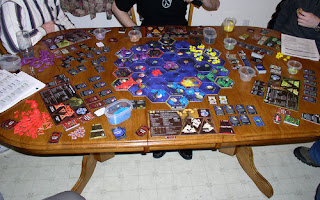
Even on a big table the game can feel crowded, imagine if you will that with the Shattered Empire Expansion you can have 8 players compared to this 5 player game.


To boot, the game is beautifully illustrated with hardy pieces and plenty of extra’s that allow you to change up the game using things like rules variants, strategy card variants and other such options giving the game a really ‘epic feel’ of possibilities. The game got a big boost in 2007 with the release of the Shattered Empire, hopefully the first of several expansions, which added a lot more of what made TI3 already such a great game.

There are a few drawbacks to the game, certainly one of my chief complaints has always been that the game simply takes too long, averaging 6 hours minimum, but extending sometimes to 8, 10 even 12 hours in one case. This however is really not a design flaw so much as the necessary commitment to play the game and most players will tell you that although they are mentally exhausted at the end of the game, win or loose it was worth the commitment and my gaming group time and time again has committed to these extended gaming sessions ofTwilight Imperium and it would seem we can never get enough.

I give this game my highest recommendation with a strict warning that if you are going to play be prepared to settle in for a long, tense and extremely thought provoking evening.

Thursday, September 07, 2006

Eve Online “The Experience”

This blog, since I started it oh so long ago, was intendent to be a series of articles about the entire scope of gaming but has instead been predominantly about a nostalgic look at gaming and the gaming industry, something of a personal hobby for me. I have done very little with this blog about what is going on today in gaming. I know for certain it’s primarily because it’s quite an intimidating task, the gaming industry has grown so much and changed so quickly in the last ten years that its practically impossible to have your thumb on its pulse and anyone claiming such a thing would have many irate critics. Suffices to say I’m going to take a small stab into this arena anyway with a little game I discovered called Eve Online. A massive multiplayer online game in a unique sci-fi setting with poor initial reviews, a long tough road to success always on the brink of self destruction but most importantly a game so revolutionary and so ahead of its time its as if it gives you a peek into the future of were hopefully the gaming industry as a whole is going.

I discovered Eve when it was already two years old and had gone through the very expected and traditionally tough growth period of all massive multiplayer online games (MMOG’s), unlike most MMOG’s however it did not start with a successful boom in fact it was more of a deflated huh? The reviews barely breaking the 60% mark with most gaming magazines describing the game as effectively boring and decisively over complicated stood on the brink of failure before it ever even had a chance. It would seem that most gamers agreed with the analysis as the population of the game at that time was at about 3,000 users.
Gamespot, a reviewer I have come to trust and know to agree with my personal tastes on most accounts gave this game a 6.6 out of 10 calling it slow paced and not recommendable. I read several reviews on Eve, paying particular attention to the gamespot review several times to try to get a feel for what they missed and as it turns out they didn’t miss anything, they just simply didn’t stick around long enough to understand what the game is really about and where it was going. Gamespot’s review of Eve like the reviews of most MMO’s showcased the typically short attention span most game reviewers have when it comes to reviewing larger and more complex games. The gamespot review although detailed outlining gameplay very well and still accurate today, captures only the activities of a player in the first few weeks, effectively it’s like a complete newbie reviewing the game who has experienced only a fraction of the game, the less important and far less exciting fraction. Calling it slow paced is accurate, Eve most certainly requires a bit of patience and dedication, but so do most MMO’s, it’s just a part of the genre. Eve’s slowness unlike most MMO’s however is the result CCP’s very tactical strategy to introduce elements of the game to the player a little at a time and assist them in the accepting and joining the overbearing and emotionally charged gaming experience Eve really is without overwhelming them. If you play for a couple of months you’ll find that the pace picks up and never returns to its slower beginnings.The truth about Eve Online is that it has so many layers it may in fact take you well over two months to really discover the nuts and bolts of the game and perhaps even longer to actually see what many Eve players have discovered to be a truly unique gaming experience.

In my eyes CCP the makers of Eve Online have done for gaming effectively what independent film makers have done for the movie industry. They have taken a revolutionary step forward in the genre of MMOG’s to give us a type of experience that not only entertains us but involves us in the unfiltered no holds bar human experience that only interactive play at this level could provide. Eve Online is far more then a 60 dollar purchase on a quick entertainment fix, and certainly offers much more then an online game. It’s the Reservoir dogs of gaming, a brutal and uncensored peek into human interaction that will get you personally involved perhaps even against your will in a way no game ever has, if of course you are ready to have a game take you to such a depth, certainly many gamers look for a far lighter experience. More importantly however is the fact that CCP understands that Eve Online is not a product to be simply packaged and sold, but a media platform, for which they have shown tremendous support going as far as having a 24 hour a day radio shows dedicated to the game, a fully realized professional magazine and unprecedented support for the community ranging from major Eve Online conventions to in game browsers to allow you to access Eve content from inside the game. Far bigger things are on the horizon like cell phone linking into the game and a rumored web based application that would allow you to log in from any PC using a browser and manipulate aspects of the game.

Like all games its certainly not without its troubles. Bugs and a relatively weak customer service center with a fairly absent system for teaching players to actually play the game can and does turn people off long before they ever get to experience the depths of the game. The forum discussions certainly reflect this but if you spend any time at all reading through the post you’ll find the true complaints have more to do with in game events that have taken place for which CCP has no compassion for, then anything else. Many new players that join the world of Eve find it a very brutal place and as they post their complaints on the forums with only a partial understanding of the games subtleties it becomes evident that they feel somehow cheated out of an expected entertainment. Veteran players have a tendency to take advantage of younger less experienced players and although unfortunate this condition of the game actually serves its purpose as a teaching aid, the greatest of all the teaching aids in fact, experience. Among the biggest debates on the forums and in game is the argument between the so called “Carebears” and “PvPers”, a debate that continues to rage endlessly about how Eve Online’s very rough and seemingly uncompassionate approach to PvP is unfair to inexperienced players or players who do not wish to participate in PvP combat. To that CCP has very cruelly and repeatedly stood by its guns proclaiming even on their main website that “you are never truly safe in Eve Online” and its evident that this is how they want it. Unlike most games that give you the option of whether or not to participate in PvP, or make PvP avoidable Eve Online makes no exceptions, no promises and certainly has no compassion. If you play Eve you will have to deal with PvP, it’s really that simple.

The question as to why CCP has chosen this unusual route in a game that is certainly big enough to have “non-pvp” areas has never really been answered but is most certainly the primary reason for its slow and steady rate of success. Eve has attracted over 100,000 players in its three year life span, predominantly adult players looking for a gaming experience that takes them beyond the very simpleton gameplay of games like World of Warcraft and its countless clones, games in which all things are very predictable, organized and filtered. They say actions speak louder then words and as new expansions are released and the game evolves it becomes more and more evident what the goal of Eve Online is and perhaps was all along which of course is to make themselves different from what the rest of the gaming industry was doing. There is no question this goal is most definitely accomplished with Eve Online, but what is the game really about?

The simple answer is that the game isn’t about individuals, it’s about the player corporations formed by groups of players who all compete for the same resources and a piece of the preverbal galactic pie. In Eve Online solar systems, are up for grabs and any player corporation can lay claim to their own area of space, however because most of the regions of space are already occupied, in order to gain your own system you have to take it away from someone else. It has become evident that these mini empires are the focus of CCP’s development as most of the major updates to the game focus on improving the tools to run these empires successfully. CCP seems to want players to create larger empires, empires big enough to eventually compete and perhaps even conquer and eliminate the NPC empires that control the area’s known as secured space which remain the few places in the game in which players can exist in relative safety.

The players not involved in this larger game effectively make up the “innocent masses” that create the player based economy and support the competitive play of the rest of the game through their economic ventures from the safety of secured space. Essentially everything in the Eve economy is made by players and well over 80% of the items in the game are specifically for combat purposes so the players living in secured space are essentially the war factories that drive the whole PvP machine. Not to say that the players who enjoy the warm, safe blanket of secured space are not important, but CCP understands that they are the worker bee’s on which empires stand and although the economy couldn’t function without them, they often suffer the collateral damage and act as a stepping stone for corporations rising to power. Like the real world for every success there are hundreds of failures and although it may not sound like fun to be a stepping stone for someone, in Eve everyone has the opportunity for success and true to life motivation leads to success. Players that lay back on the sidelines won’t get very far in Eve and this may be why Eve is not a very approachable game for casual players.

In addition to this larger game going on in Eve’s background there is also the day to day troubles, the subtle inner workings of the politics, crime and economics. People in Eve can fall victim to out right criminal behavior or poor political decision leading to a variety of consequences and events in the game that result from player interaction. Piracy, extortion, scams and outright theft are all part of the game and as a player you have to watch your caboose sort of speak to ensure you don’t end up on the receiving end of this criminal behavior. For this CCP does not apologize either and the only explanation ever given by CCP is that for every behavior there is the opportunity for a counter behavior. In essence you’re expected to solve your own problems in the game and CCP has no compassion for someone who gets blown up on a hauling run by a criminal or uses a poor choice of words when dealing with another corporation which leads to a war declaration against his corporation. This may explain why the majority of the Eve population lives in secured space, but the statistics on secured space are heavily skewed by the fact that players that do in fact live in unsecured space spend a lot of time in secured space anyway to make their purchases most likely because the economy of secured space is better and cheaper.


There is certainly a cycle to Eve Online and in a way if you step back and watch you can see the corporation politics play out over and over again, and find a pattern emerges, one that may seem a little too true to life. The first thing that usually happens is a young player finds that playing solo in Eve is both hazardous and difficult, most discover that joining a corporation is the way to go. Some more ambitious player create their own. From their it’s a domino effect of events. The corporation grows in numbers, which in turn grows their needs, which in turn grows their ambitions and the eventual clash with other more established corporation occurs. Young corporation that survive this long have little hope of surviving for long unless they ally themselves with other corporations or make it a point not to get in anyone’s way. The resulting Alliance, really the empires of the game are what drives the ever escalating wars in unsecured space and effectively what Eve is all about. Alliances just like corporation rise to power and fall from grace and this daily, weekly and monthly occurrence should be what all Eve players aspire to get involved in.

Certainly there is a lot of abuse of the PvP system, despite the full and unfiltered PvP allowed there are still people out there who take it even further by exploiting some of the games weaker mechanics to get an edge or grief players unnecessarily and without cause, this is often the center of debates on the forum and the counter argument of the care bears who believe this should be enough to sway CCP to make PvP consensual. CCP thankfully acknowledges the failures in their mechanics and continually tries to come up with creative ways to stop grief play and exploitation of bugs and poor mechanics but CCP has not faltered on their vision of the game and PvP in all its glory is without question here to stay as well as everything that comes with. It’s a good to thing because the reality of Eve Online is that without the full unfiltered and ungoverned PvP much of what makes the game work would be gone, PvP is really what allows the many subtleties that make it such a revolutionary and exciting game to play.

PvP however is not all there is to Eve, certainly it’s the driving force of the game, but other things like the unusually viable player economy create an entire sub game on which you could spend all your time in Eve. The economics of Eve are us cut throat and brutal as they are complicated and between mining, production, research and trade the very intricate cycle of making money is highly entertaining to the economic minded and helps to bring in an entire group of players that might not otherwise be interested in a fully realized PvP game like Eve. A pretty brilliant move in my opinion, on the part of CCP, to make the game so attractive to non-pvpers. It’s a great way to introduce these players to PvP effectively by force and despite the constant complaining on the forum, most economic minded players will tell you that the risk of getting pirated, robbed or worse gives the whole game a far more exciting feel. Even something as simple as mining, which in most games is usually a dull and uneventful experience in Eve can be a highly exhilarating and very dangerous experience.

CCP has done a great job of taking the monotony out of everything. Anything that would be considered grinding, essentially burning time, is completely eliminated in Eve. Experience points are replaced with a time based training system which does not require you to do anything, you don’t even have to be online to progress as a character. Production unlike games like Everquest 2 that for example try to create a very repetitive and time wasting mini game is reduced to simply getting the resource needed to make an item and hiring a production factory to make the item for you. Clever designs like that allow players to focus on other more entertaining aspects of the game. Research is handled the same way as production and offers players a chance to separate themselves from the rest of the market by researching Item Blue Prints which will in turn allow you to make items cheaper and faster, giving you an fiscal edge in the market. Between the sheer size of the Eve Universe, the separation of the markets into regions of space of which there are well over a hundred, the enormous library of usable and actually used and sought after items in the game there is always some market in the game that is unfilled that acts as an opportunity for a new player to get into and make that precious ISK.

I could most certainly run an entire blog dedicated to Eve Online and even if I wrote an article a day I would never get to all the finite details and subtleties that exist in the game, perhaps this is why so many reviewers felt Eve Online was too complex to recommend. To the inexperienced eye anything you don’t already know about can seem overwhelmingly complicated at first but as mentioned before CCP really understands that Eve isn’t just a product, it’s a media device for entertainment. They seem to understand that the only way to truly run an MMO is to make it such that a player logs in every day and does not know what to expect. There is no routine or “grinding’ in Eve required, you don’t log in to do “dungeons” or “raids” as the primarily goal of the game, there is no kill/loot/level up cycle in the game forced on you in order to advance in the game. Eve is not a game so much as it is an experience and each time you log in you find yourself in the middle of a fully realized and self sufficient universe in which everything is always happening. Eve is an amazing game which is both difficult to explain and even harder to imagine, like many things in life sometimes you just have to go out there and experience it for yourself. I can’t possibly give a game a higher recommendation then Eve Online, it is by far and wide one of the best games in existence and to miss it is to cheat yourself out of a truly unique gaming experience but be warned, this is an adult game and although entertaining, it is most certainly going to force a gambit of emotions you may not be ready to have when playing a game.

Thursday, November 17, 2005

A Secret Kept By Millions

Dungeons and Dragons and The World Of Closet Nerds

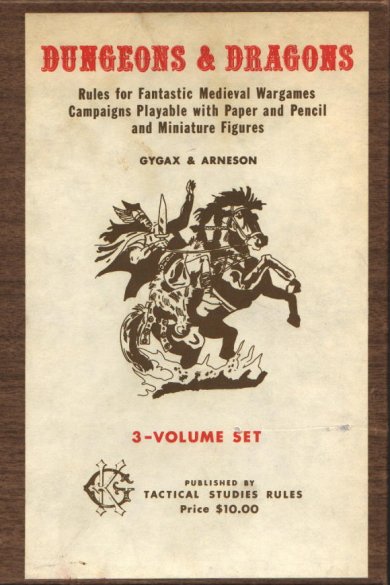
I admit it, I’m a nerd. I did it all and I’m coming out of the closet. Yes… Let’s go over my nerd check list. Dungeons and Dragons… Check… All night sessions of RISK… Check. Magic: The Gathering… Check. Well, you get the picture, I could go on, but it suffices to say if there is a nerdy thing to do, I did it. The funny thing is that many people out there come from the same world that I do, far more then you might expect. Out of the many closet nerd things to do however none puts a bigger stamp in your nerd passport then Dungeons and Dragons. Would it surprise you to know that Dungeons and Dragons for example has been around since 1974? Did you know that over 20 million people have played dungeons and dragons world wide according to a recent BBC news study since its release? Did you know that it continues to this very day to suck up the lives of millions of people around the world?

Dungeons and Dragons is far bigger then most people realize but because of this nerd stigma that has been placed on it, it continues even today to be a more or less an underground, cult style hobby. It’s completely uncool to admit that you play dungeons and dragons, despite the fact that over 20 million people play it. It has played an enormous role in popular culture with countless books, cartoons, movies, magazines and anything else you can think of dedicated to one of the worlds unusual hobbies. It’s amazing with all the history and the impact to popular culture that D&D has had there are so many people completely oblivious to what it’s about and what the attraction to this pretend world really is. The next few articles are going to be dedicated to this unusual and exciting game which is at the very core of every aspect of gaming today.

The word role-playing usually conjures up images of strange sexual encounters setup by a couple who has grown completely bored of their sex life and although that frightens me, dungeons and dragons role-playing is a quite a different thing but is at the heart of this mysterious hobby. In dungeons and dragons you create an imaginary character that will represent you in an imaginary world, which will in turn be created by the Dungeon Master (The host of the game). The dungeon master in addition to creating the world, creates a story plot in which your characters will get involved, having the task of resolving the plots conflict. In many ways it’s like a movie or book that you and your friends will play out except that no one really knows the outcome. The dungeon master knows what everyone in the story will do except the players who are in control of their own characters and act as they wish, guided only by the characters background which they create before the game begins. Confused? Let’s try break it down some more.

It’s really simple, characters, just like in books or movies need to have substance. A personality, a background and an appearance, these aspects define a person that you can imagine and during the “character creation” step which happens prior to playing the game you decide what kind of person you want to be in this imaginary world you are about to step into. Just like in books or movies you create this character by writing down specifics of your characters life, including statistics about your characters abilities based on rules using a game system outlined in the many dungeons and dragons books. This short story and statistics will from that point on be your guide on how to appropriately role-play (there is that word) your character in the game and what he is capable of doing. In essence, you create him anyway you want, but once the game starts you are bound by what you have written down. If for example you make your character an insensitive sexist brute with great strength and fighting ability, you will have to role-play your character in that fashion despite anything that occurs in the story and you will be limited by his abilities. It may seem simple, but it can be quite a challenge depending on the circumstances of the story, which brings me to the second aspect of the game.

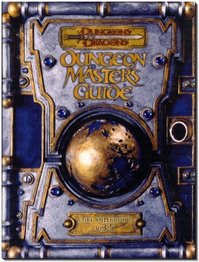
Once the characters are created, the Dungeon Master is then responsible for creating a world in which these characters will live and the story that they will get involved in. It’s really the toughest job and it’s the reason that the Dungeon Master is usually the most dedicated of the players. He’s also the host of the game and in charge of making sure the rules are followed, using the almighty dungeon master rule book. The story will be created around the characters you and your friends have created and will usually make you the center pieces of the plot. It will be designed to challenge the characters in ways that will hopefully surprise and entertain you. When the game begins, the dungeon master will describe everything about the world, the location were you currently are and any important events that are happening. Then you are cut loose into this imaginary world role-playing your character anyway you want, bound only by your imagination and the limitation of your characters life story and abilities.

There is far more to it then that, but if there was a simple description of the game, I think that was it. The heart of the game really is in the role-playing and the adventures that the story plot created by the dungeon master presents. Fortunately for the less imaginative there is enough source material (books) out there so that you don’t necessarily have to create your own world or even your own story. Books, magazines, maps, story modules (adventures created so you can get into the game faster) and of course a enormous gaming community at your finger tips makes this game far more accessible. I will probobly do more articles in the future about role-playing game but to me none carry the quality and nastalgia of Dungeons and Dragons.

Wednesday, September 07, 2005

The Golden Age Of Gaming: Part V The Death of an Era

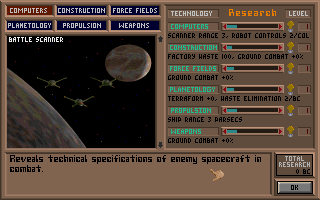
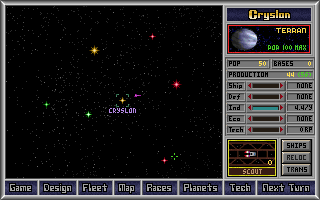
As the old saying goes, all things must end and the golden age of gaming was unfortunately no exception. I doubt anyone knew it at the time, hell most of us didn’t even know we were living through the golden age of gaming as it was. Still by about 1994 the golden age of gaming was just about over, along with what was left of the small time business ideology of the last two decades that allowed these golden age classics to exist. The gaming industry was already taking whole new directions in design, marketing and mentality in general of what should go into a game and unfortunately for us it was for the most part bad, with some very small exceptions. Just as the final curtain of uninhibited creativity dropped, there would still be a couple of magical games, perhaps the best of them all, that would be released and still earn the right to be called a golden age classic. Master of Orion among them, despites it’s affiliation with “da man”, Microprose, was actually one of very few games of it’s time that was released as the designers of the game intended. Uninfluenced by the disastrous gaming industry philosophy being instilled into the industry, something that would plaque games and game design over the next decade, Master of Orion was released in 1994 in all its glory as a DOS based game.

Master of Orion was in many ways a groundbreaking game, but from a design perspective despite being well put together, it wasn’t necessarily all that original. In more then one way it was civilization in space, not that, this alone made it unoriginal and certainly it didn’t make it a bad game. To the contrary, by using Civilizations successful features and adding a few original design idea’s Master of Orion was far superior to Civilization in many ways and in fact, if my humble opinion counts at all I would say it was the best game of its era. Master of Orion is the product of taking good idea’s from other games and putting them into a game using a science-fiction formula that in regards to the turn based strategy genre hadn’t really been used much. In fact I think there were only one or two games that would even qualify and they were very forgettable titles I couldn’t even find on the internet today. Master of Orion became the great grandfather of the newly born genre that would come to be called the 4x turned based strategy games and in the coming years it would offer more to its genre then any game has to this very day.

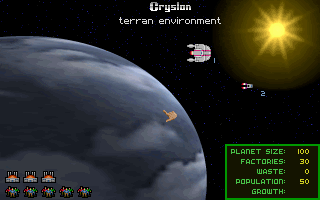
Master of Orion was a galactic conquest game in which you were a ruler trying to conquer the known universe. It had plenty of starting conditions, competitive alien leaders, technology to research, planets to govern and a good mix of victory conditions, by 1994 it was a standard for turned based games set by you guessed it, Civilization. Master of Orion had more to it then that however and in many ways it’s really what made it special for sci-fi freaks like me who loved the idea of making our own ships. The game allowed you to use the technology you researched and custom build and name your own star ships using said technology. In addition units didn’t just bump into each other and give you a funny noise to let you know who won or lost combat, but rather there was a tactical battle screen that would come up anytime enemy units would meet in space and a whole separate strategically mini game would take place to determine the winner of any given combat. It was a fairly simple design with an incredibly in depth strategically element and quite frankly it was just fun to play. It wasn’t a magical game that blew you away, but sometimes being fun and addictive is all a game has to be and in the case of Master of Orion, it’s exactly what you got.

With Master of Orion, the Golden Age of Gaming ended and would never be again, but pc gaming even then was still in its infancy. There is still plenty of gaming history left for us cover and we are going to dive deeper into the specifics of what made the gaming industry what it is today. The Golden Age of Gaming was just a beginning, but it was a great beginning.

For fans of Master of Orion, especially those that were disapointed by either or both of the sequals, there is a new version of the game in the tradition of the original classic being developed by gamers outside of the industry system called Free Orion. You can find information about the game here a ttp://www.freeorion.org/index.php/Main_Page and even play the current build of the game.

Monday, September 05, 2005

The Golden Age Of Gaming: Part IV Global Domination

The Golden Age of gaming really was experienced for the most part on the Commodore 64 in the mid 80’s to early 90’s in my opinion. That’s not to say it ended there but without sounding like a Commodore 64 Yuppie, it was during those early days of computer gaming that both game design and gameplay was at its purest form.

I’m sure not everyone would agree, but hear me out. For starters during the Commodore 64 days game designers had to deal with extremely limited resources, which meant that creativity and focus on gameplay was essential to have a successful game. Things like graphics, sound and music were additions made after the kinks of the actual game were worked out. As the industry progressed, giving way to more and better resources you would think game designers would take advantage of those resources by expanding their game design. What happened instead was that the resources were traded in for better graphics, sound effects and music and did little to progress game design forward with a few exceptions of course. I believe the only way to have a successful game is to focus solely on game design, everything else is just a bonus. The Golden Age began to decline when this ideology slipped from the minds of game developers and ended when words like eye candy and franchise rights were added to the mix. It was a bitter sweet time in the early 90’s because despite the fact that the technology was becoming far superior to commodore 64, the games that were released for these seemingly better machines were not.

When the commodore 64 lost favor for bigger and better machines like the IBM PC, the great golden age of gaming began to slip right through the finger tips of the game developers, who had already turned computer gaming into a legitimate business. Sadly the game industry would remain in a more or less infancy for many years for this very reason in my opinion and were it not for a few game designers that lived through and remembered the golden age of gaming, it would probably still be struggling today. Yes, the golden age of gaming was on a decline by the early 90’s but it was hardly over.

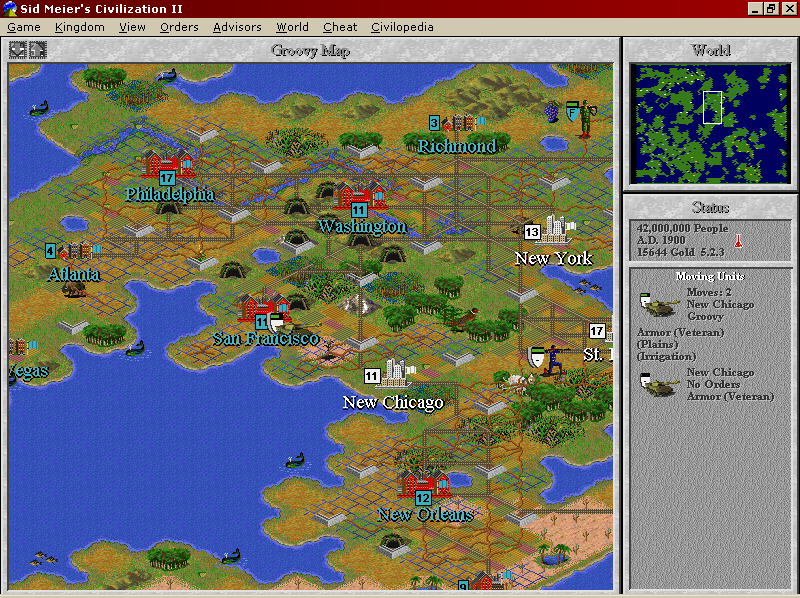
One of several great game designers of the early days of gaming was Sid Meier who by the early 90’s had already contributed a golden age classic called pirates to the gaming industry. Quite frankly, Sid could have grabbed his chest, keeled over and died right then and there and he would be no less famous today then he is right now, that’s how good Pirates really was. Pirates however wasn’t to be his greatest contribution, far from it, another title would take that honor and would in many ways revitalize the declining golden age of gaming, in fact almost starting a new golden age in its own right. Civilization was the name and global domination was the game.

Civilization was released for the Amiga and PC initially, having been too advanced for machines from earlier eras in 1991. It would be the first of over 20 variations of the game released on almost every machine capable of running games between 1991 to today. Infinitely popular and awesomely designed Civilization was in its own way a gaming phenomenon that would sweep through and capture the imagination of gamers and non gamers alike. In my opinion it’s a special game because it broke the nerd barrier that prevented anyone who didn’t want to be a nerd from playing, in fact it became kind of cool to play civilization because it was actually an educational game to some degree. To hardcore gamers like me however it was far more then just some trend, Civilization was the single best game ever released at the time and to many players out there holds that title to this very day.

What was it that separated Civilization from the pack? Purely and simply, game design. There could be no easier answer and for those of us who followed gaming at the time and now, at that very moment in time there was nothing that came even remotely close to the game design level Civilization was at. In fact, with the exception of the Civilization sequels even today there are very few games that play at the level of intelligence and strategy as do the Civilization series games.

The games design is brilliant because Sid took every aspect of a global domination game and included it using not realistic historical data, but common sense data, things that we all sort of already know. This classic design genius is what makes most of Sid Meiers game designs so great, he understands that popular culture and not reality rule the gaming world. It makes games like Civilization approachable because it doesn’t demand too much knowledge from us, while at the same time demanding that you think when you play. Sid also understood that different people will play his game in different ways and the option to do just that is a critical part of all of Sid Meier games success.

Science, Military, Diplomacy, Economics and Domestic affairs are just some of the things you had to manage as a leader of a nation among many. Competing for the ultimate prize, the planet, in on itself that alone had the makings of a great game. In fact most game designers would probably have stopped right there and then. Sid however had the foresight to know that there was far more possible with a game like that. Randomized maps with a variety of starting conditions that would create endless replay-ability was unheard of at the time, at least at this level of complexity. Multiple ways to win including the lovable space race which could allow you to win the game even if you were loosing the global war. The game had so many possibilities you would have to play it at least a thousand times to see them all and even then there was no assurance that you had.

I could go on and on about the game, but I think it should suffice to say that its lovable complexity and approachable gameplay made Civilization the ageless classic that it is. Easily one of the greatest games of it’s time and perhaps the last game to be released that had a global impact on the gaming industry during the golden age of gaming.

Civilization defined the turned based strategy games genre but more importantly it created a standard for strategy games that designers continue to this very day to match. Thank god it did! Civilization gave way to other turned based strategy gems that furthered the genre and of all the games post Civilization there was none that captured my attention more then the Golden Age Classic Master of Orion. In many ways Master Of Orion would create a whole new genre of gaming itself despite belonging to the turned based strategy games genre, but more importantly Master Of Orion would prevent the golden age of gaming from ending prematurely.

Thursday, September 01, 2005

The Golden Age Of Gaming: Part III

The Gold Box Set

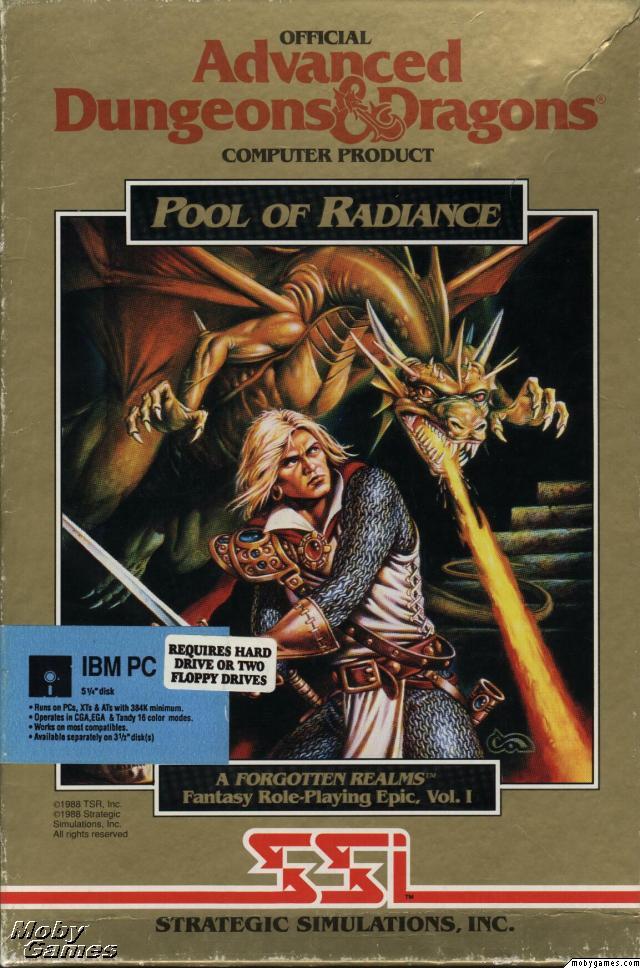
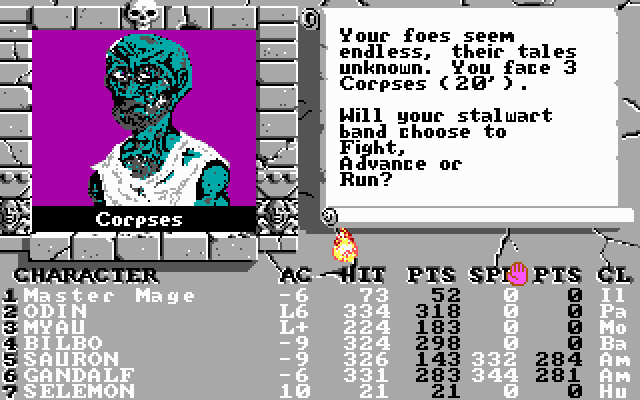
Finally D&D, for the love of god why did it take so long! I realize I’m branding my self nerd of the century by saying it, but at least I’m out of the closet. I love D&D and the fact that someone finally made a D&D computer game in the late 80’s called Pool Of Radiance (Forgotten Realms) was like an answer to my prayers. By the time Pool Of Radiance came out I had already been fully nerdified by playing the pencil and paper version of D&D and like most geeks I lied about it until, well, until just now. As far as I’m concerned the Golden Age of gaming had hit its peek with Pool Of Radiance and for many of us closet dorks it was as good as it ever got.

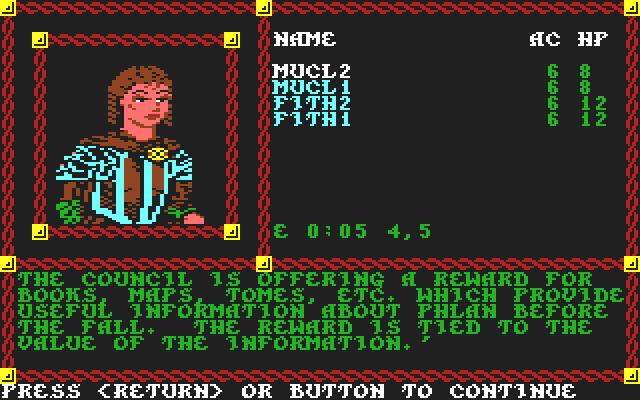
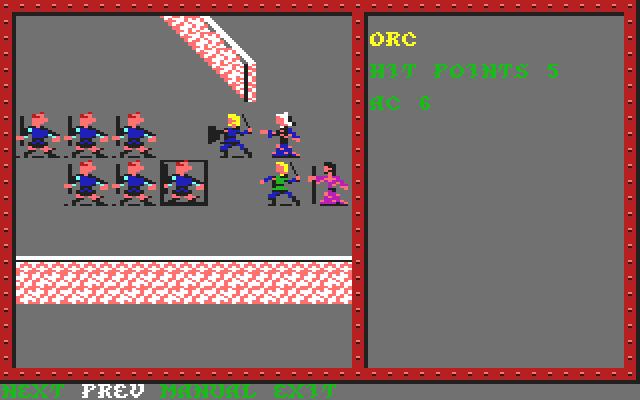
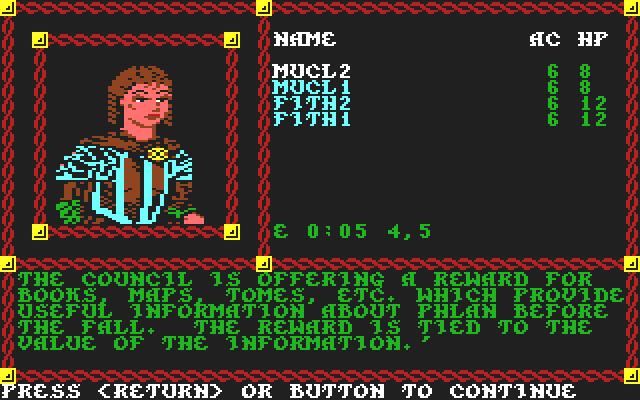
Pool Of Radiance was still a game very much in what was at the time a standard format for computer RPG’s like Bards Tale. You made your six characters, you equipped them and you traversed the world in the first person perspective. That however is as far as the similarities went because Pool of Radiance definitively changed how role-playing games would be played in the future. For starters, story became a key element as opposed to combat, which by the way was also changed from the standard text based descriptions of many of its predecessors. There was an overall story in Pool of Radiance that was built up through numerous quests that your characters would complete. The impact of their success would change aspects of the game world, like the safety of traveling through certain area’s of the game for example. More so however the story was actually interesting and well written. Combat also got an overhaul, having been changed to a top down view, creating a turned based strategy mini game. The rules of the pencil and paper D&D game were re-created in Pool of Radiance and in many ways it what really gave the game it’s uhmpf…

Sound, Graphics, Music and game play had reached a new plateau in gaming and again the expectation of players rose to a new level. Pool of Radiance also had a significantly larger following and was so much a classic that it was actually re-released several times on DOS based PC’s in the future as you guessed it “Gold Box Games”. It also triggered sequels like Curse Of The Azure Bonds which was an even larger and more complex game that in my opinion was also an amazing achievement for its time. Most importantly however Pool Of Radiance proved that D&D wasn’t some closet geek thing and in fact it was very much a mainstream thing that most of us lied about all the way to adulthood. It ensured that D&D would forever be linked to PC and Video gaming and D&D games of all sorts continue to be made to this very day.

The Golden Age of gaming had certainly peeked with Pool Of Radiance in my opinion. What came next was a sort of bandwagon mentality in that the genre of role-playing games has been established and no one dared mess witht the format. Despite some great games coming out in the early 90’s, the golden age of gaming began to decline. The decline didn’t mean it was over, far from it. In fact there were new platforms on which to put games with better sound, graphics and certainly more advanced game-play that would energize the industry and create a far larger player base. New game designers jumped on board that would eventually revitalize (not that it needed it) the gaming industry by looking at game-play in a very different way.

The Golden Age Of gaming was certainly dedicated to role-playing games, but strategy games were about to have a revolution that would shift many role-playing nerds like myself into a completely different area of gaming. A man named Sid Meier who had already created a cult following with his commodore classic Pirates was about to take the gaming industry by storm and turn a grumpy out of touch old men like my dad into.... if you can believe it, a gamer!!
The Golden Age Of Gaming: Part II

A New Age Of Gaming

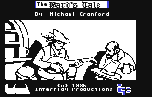
Bards Tale, Bards Tale, Bards Tale…. If you don’t know what I’m talking about you can count yourself out of the old school geek circle. This Golden Age classic rates at the very top of the mid 80’s games for the early game PC’s like the commodore. In my humble, albeit nerdy opinion, in everyway that I can think of, Bards Tale defines good gaming even for today’s standards.

For starters Bards Tale offered a tremendous amount of flexibility and choices. Before you even start the game you had to create a party of characters which would in turn affect your fighting strategies from that point on. After you created your party you had an entire world to trample through, of which, if you were a true nerd you mapped every inch on grid paper. The graphics, for it’s time, where great and the perspective of the game was in the first person. There were monsters, trap, annoying puzzles and most importantly a large dungeon to explore securing any doubts that this game was in fact a dungeons and dragons role-playing game.

Still this early RPG like ZORK, required a lot of imagination as the combat had no sound and all you really got was a report of what your characters did via a little text box. Ultimately you had to imagine the fight, the scene and what your characters looked like. The heart of the Pencil and Paper RPG ideology was still secure in these early games but Bards Tale ultimately was upped by Bards Tale sequels and others like Wasteland. All of which were golden classics in their own right.

This true gem had a big impact on the gaming community, mainly through expectation. After a game like Bards Tale going back to text based games or earlier RPG’s with lesser graphics like Ultima just didn’t produce the same nostalgia that Bards Tale did. Gamers expected much more from their games at that point and luckily so where the developers of these games..

To me, after Bards Tale, every role-playing game I played from that moment on was an effort to find the feeling I had with this lovable classic. Fortunately the golden age of gaming had just begun and the excitement and anticipation of a great game would not be disappointed in the coming years. In fact, some of the best games in gaming history were about to be released and they would not only redefine gaming, but they would unit an American sub-culture that had already existed for over ten years. Still like ZORK, Bards Tale was a moment in gaming history that would never come again and unless you were there just at the right time you probably missed it.

Well, perhaps not. The classics as they say can never be forgotten and thanks to some friendly old school gamers who cling to the past like a 90 year geriatric holds on to the steering wheel of his oversized Cadillac, these games can still be found on the internet. I urge anyone who hasn't already experienced these wonderful classics to give it a go. You won't regret it!! http://www.c64unlimited.net/gameslist/games_aaa.htm

Wednesday, August 31, 2005

The Golden Age Of Gaming: Part I

The First Classic

There was a time, not long ago when the image that came to mind of a "computer gamer" was that of a nerdy twelve year old kid with thick glasses, pimples and little hope of ever reproducing, hiding in his room playing games naturally by himself. Sadly that was not that far from the truth back in the 80’s early 90’s, except of course regarding the age of the so called geeks. We know now that in fact most of the "computer nerds" back then, were actually young adults between the ages of 16-35 with thick glasses, pimples and little hope of ever reproducing who hide in their rooms playing games. These unsuspecting gamers were about to kick start one of the soon to be largest entertainment industries in the world, if you can believe it an industry that was in short order going to become main stream. They weren’t just playing games either, they were creating them using imagination and skills that would soon pay as much as a hundred thousand dollars a year.

I was one such nerd and although I wouldn't dare take credit for shaping the gaming industry, I have watched it grow from its infancy and played along every step of the way, even making an occasional contribution now and then. No matter how much laughing and finger pointing I endured for my secret hobby, I like many kids and young adults from that era look back on those early days of gaming with great fondness. Those of us who risked ridicule enjoyed an American sub-culture that was so tightly woven together that even today there is an unspoken recognition by most gamers from those days of what is considered “classic gaming” and what it means to be old school. The rest of this article is dedicated to those card caring nerds from those early days of gaming. If the next few paragraphs triggers an emotional response and you find yourself day dreaming of your wasted youth you can consider yourself to be on the in. If you read the rest of the article and find yourself wondering what the hell this guy is talking about, unfortunately it means you missed “The Golden Age” of gaming.

Having been partial to role-playing games as a result of my exposure to pencil and pencil RPGS games like dungeons and dragons (yes I know I'm a total geek, lets all say it together) the golden age of gaming on the commodore 64 was unmatched. Not that there were that many options as far as systems go, consoles had certainly been around but if you think Pong is classic gaming your kidding yourself. The Atari was certainly an option, but the commodore brought new possibilities to gaming because it was a far smarter machine with far better specs then had been possible up to that point. More importantly however Q-basic and similar programming languages made it possible for closet geeks to create their own games and it wasn’t until then that the golden age of gaming began.


The first and perhaps the most nostalgic game that comes to mind was barely a game, in fact it was nothing more then interactive reading with no graphics to speak of at all. Text based role-playing games like ZORK were so classic, that I can actually remember the feeling of playing the game even now. What made them so amazing was that it gave you control over a story that was there for you not just to read but to discover its secrets, while allowing you to imagine the scenes rather then having graphics feed it to you with a spoon as is the case for all games today. It was very much like RPG games like dungeons and dragons that you could play on your own and perhaps it’s creators intended it to be as such. My favorite part of the game was the fact that you weren’t a fictional character, in fact unless you really read into the game the assumption always was that you were the character. It was a in a way a first person game, assuming you had enough imagination to make it so and the goal was to explore, find treasure and solve the diabolic puzzles created by the twisted minds of Marc Blank and David Lebling.

ZORK defined a new genre of gaming and is easily considered the great grandfather of PC based RPG gaming by most old school gamers. There were plenty of other text based games that deserve their credit in the historical gaming archives, notably the ZORK sequals and the lovable Hitch Hikers Guide To The Galaxy. ZORK however holds a special place in my heart and I see the game like a pet that died long ago who could do no wrong. Text based gaming fell of the map rather quickly, replaced by graphical RPG’s, but if you happen to be around for that brief moment in time you were lucky enough to experience gaming in it’s purest form. For anyone who isn’t too jaded to travel back in time to grasp on to a piece of gaming history I strongly recommend taking a crack at ZORK even today.

If you are brave enough to tackle this classic let me be the one to get you started. Lets see if I can remember it now. " You are standing in an open field west of a white house, with a boarded front door. There is a small mailbox here. "

Good Luck

Get ZORK for free here http://www.csd.uwo.ca/Infocom/zork1.html.